
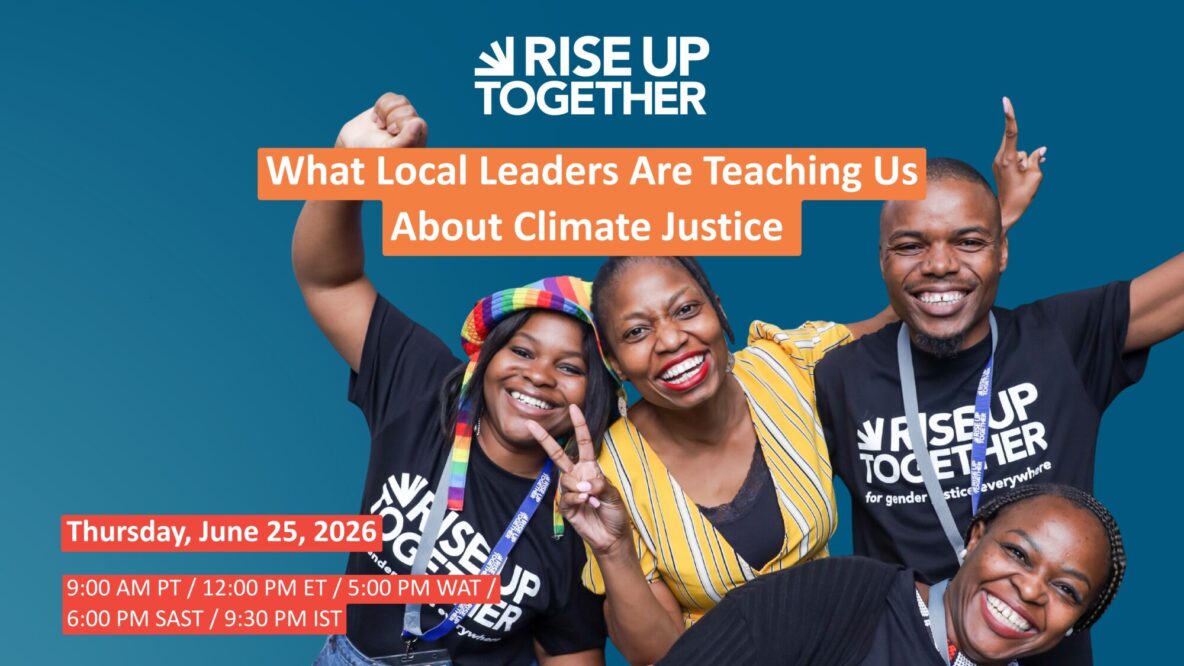
On June 25, 2026, Rise Up Together convened global movement leaders for What Local Leaders Are Teaching Us About Climate Justice – a conversation grounded in the experiences, insights, and solutions of communities on the frontlines of climate change.
Thank you to everyone who joined us live and helped make this such a meaningful global conversation. We were inspired by your thoughtful questions, reflections, and the many messages of appreciation shared for our speakers and their insights. It was a powerful reminder of what becomes possible when we come together to learn across countries, movements, and lived experiences.
If you missed the discussion – or would like to revisit it – we invite you to watch the full webinar recording here.
We also encourage you to explore our new report, Lessons at the Intersection of Climate and Gender, which informed the discussion and draws on insights from more than 500 organizations and movement leaders working across India, Kenya, Nigeria, South Africa, the United States, and globally.
The discussion was moderated by Josie Ramos, Co-founder and Director of Learning at Rise Up Together, and featured Vidhu Prabha, India Country Lead; Naomi Nyaboke Monda, Kenya Country Representative; and Stephen Oloche Idoko, Program Manager at Inclusive Friends Association and Rise Up Leader. Together, they shared lessons from communities across India, Kenya, and Nigeria on what it will take to build more equitable, locally led responses to climate change.
One message emerged clearly throughout the conversation: climate change touches every aspect of people’s lives, and building a more just future requires solutions rooted in local realities, community leadership, and gender equity.
Across regions, speakers described how climate change is reshaping livelihoods, food systems, health, economic opportunity, and community well-being. Women, girls, Indigenous communities, people with disabilities, and other historically marginalized groups often bear the greatest burdens while having the least influence over the climate-related policy decisions that affect their lives.
Yet the conversation was equally grounded in hope. Across India, Kenya, and Nigeria, speakers shared powerful examples of women, young people, Indigenous leaders, disability advocates, and grassroots organizations already organizing, innovating, and leading climate solutions shaped by local realities and lived experience.
One conversation from India stayed with Vidhu Prabha long after the research concluded. Recalling a discussion with an Indigenous leader, she shared:
“One tribal leader told us, ‘When you talk about land, you often think of it as a commodity or an asset. But when we talk about land, we think about our food, our children’s nutrition, our health, our livelihoods, our soil, our biodiversity, and the entire ecosystem that sustains our lives.’”
For Vidhu, the conversation illustrated that climate action must begin with how communities understand their relationship to land, livelihoods, and the ecosystems that sustain them.
Building on that idea, Naomi Nyaboke Monda reflected on how organizations across Kenya are already responding to climate change through locally led solutions.
“Climate action works best when it is locally led, gender-responsive, and addresses the realities people face in their everyday lives.”
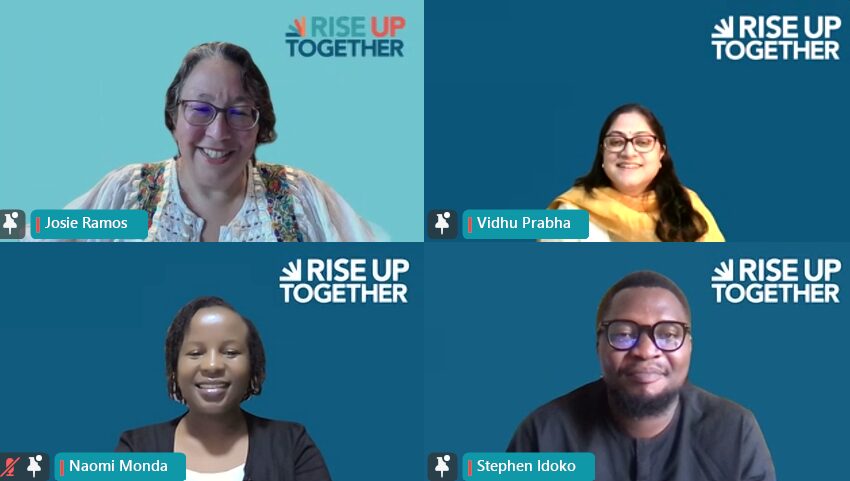
As Rise Up Leader and climate justice advocate Stephen Oloche Idoko shared during the webinar:
“The people most affected by climate change should not be an afterthought – they should help shape the solutions.”
Stephen’s commitment to disability-inclusive climate justice extends beyond his participation in this research. As a Rise Up Leader, he is currently advancing Empowering Women and Girls with Disabilities for Inclusive Climate Justice in Nigeria, a Rise Up Together-supported initiative that strengthens the leadership of women and girls with disabilities while advancing more inclusive climate policy and practice. Throughout both the climate landscape mapping process and his current advocacy project, Stephen has worked closely with Theresa Kaka Effa, Rise Up Together’s Nigeria Country Director.
“Working alongside Stephen throughout this research and now as he advances his Rise Up Together-supported project has been a powerful reminder that the most effective climate solutions are shaped by the people living these realities every day,” Theresa reflected. “His leadership reflects what’s possible when women, girls, and people with disabilities are recognized not only as those most affected by climate change, but as essential leaders in creating more inclusive and equitable solutions.”
Throughout our research and webinar, we heard stories of communities adapting to drought and flooding, women strengthening local food systems, young people advancing climate action, and organizations building coalitions to influence policy and practice.
The challenge is not a lack of solutions. Indeed, community-driven climate solutions already exist and are being advanced by Rise Up Leaders around the world every day. Rather, it is ensuring that resources, opportunities, and decision-making power reach the leaders and communities already driving change – and that those historically excluded from climate policy and funding are recognized as experts, advocates, and leaders and included in the decisions shaping a more equitable future.
At Rise Up Together, we believe climate justice and gender justice are inseparable.
Lasting progress happens when women, girls, and their allies have the resources, networks, and power to influence the decisions that affect their lives and communities. We look forward to continuing this learning journey alongside local leaders around the world and advancing climate solutions rooted in equity, dignity, and collective action.

