
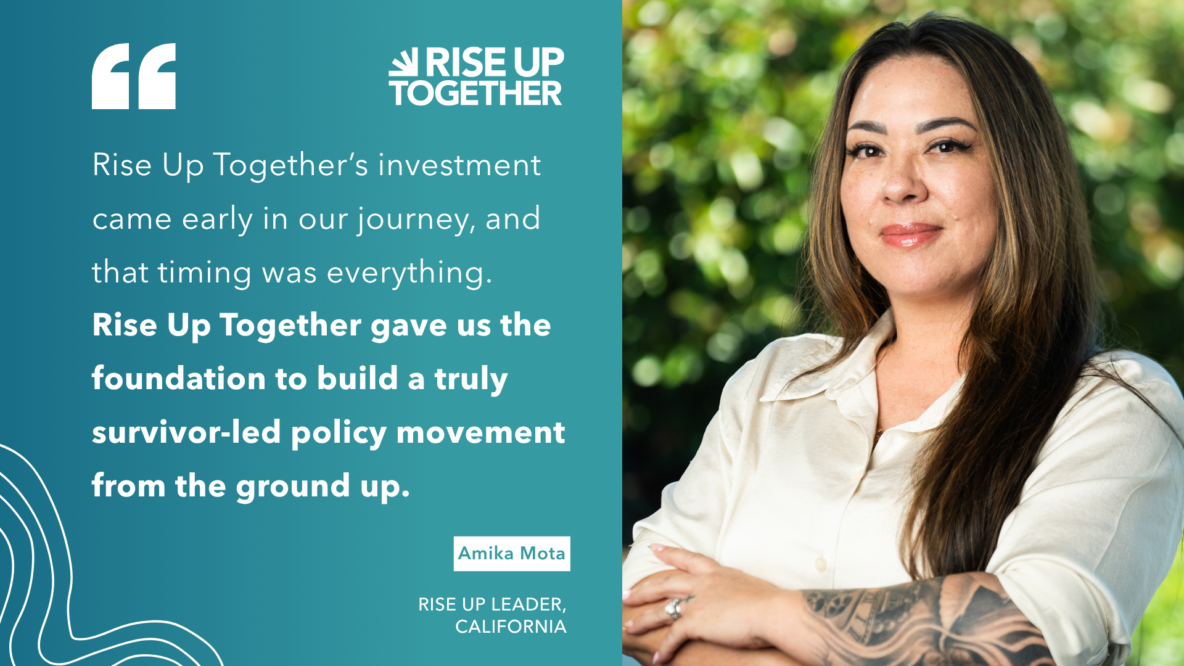
For Rise Up Leader Amika Mota, the work to make California’s women’s prisons safer and more accountable is deeply personal.
Amika draws on her lived experience with California’s prison system to help others navigate and transform the systems that once impacted her own life. Today, as part of Sister Warriors Freedom Coalition, she works alongside currently and formerly incarcerated women and transgender people to ensure that those who know these systems firsthand have the power to shape how they change.
“My commitment to this work is rooted in my own lived experience as someone who was incarcerated in both of California’s women’s prisons,” Amika shared. “This work is deeply personal to us because [after we were released] we left loved ones behind who are still enduring extreme, unsafe conditions right now.”
With funding and support from Rise Up Together, Amika and Sister Warriors have been working to address staff sexual abuse, violence, retaliation, and other harms within California’s women’s prisons while strengthening transparency and accountability.
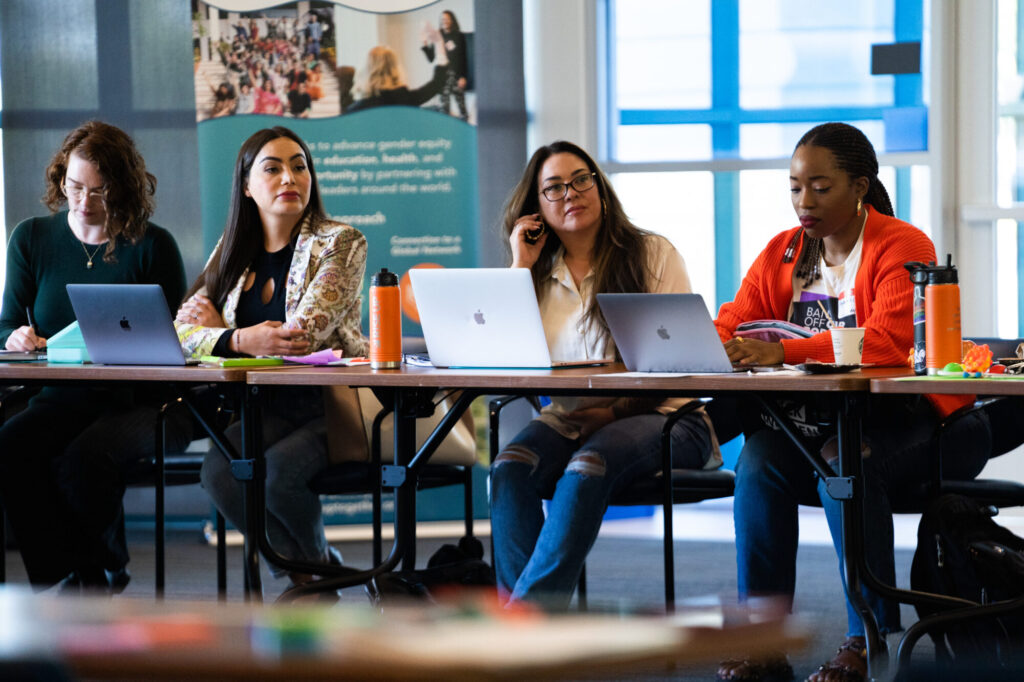
But the heart of the work is not simply changing policy. It is changing who has the power to shape it.
For years, Amika says, formerly incarcerated people were often invited into policy conversations to share their personal experiences rather than recognized as experts who could help shape policy itself. Amika, Sister Warriors, and their partners have worked to fundamentally shift that dynamic.
“We sharpened our skills, built powerful coalitions, and transitioned from simply sharing testimony to drafting, shaping, and passing the legislation ourselves,” Amika said. “You simply cannot design effective policy without the people who have to live with its consequences leading the work.”
Rise Up Together’s investment helped Sister Warriors gather evidence directly from currently incarcerated people, bring survivors of staff sexual abuse from across California to the State Capitol, host statewide town halls, and build relationships with community partners and decision-makers.
Now, as Amika’s Rise Up Together-supported project enters its final stages, that work is reaching a critical moment.
Two key pieces of legislation supported by Sister Warriors and thier partners are continuing to move through the California Legislature. Assembly Bill 464 (AB 464), which would strengthen protections for incarcerated survivors of staff sexual abuse, has been ordered to a final vote on the California Senate floor. California Senate Bill 337 (SB 337), which includes additional measures to address staff sexual misconduct and strengthen accountability, was amended in the State Assembly on August 20, 2026.
Among the proposed changes are stronger protections against retaliation following reports of staff sexual abuse, greater access to outside support, and additional safeguards and oversight related to staff sexual misconduct.
As Amika’s project wraps up, these legislative outcomes are still taking shape. We expect to have a clearer picture of the project’s final impact in the coming weeks.
But Amika says meaningful change is already visible in the way state leaders are engaging with incarcerated communities.
“We’ve moved past basic awareness into real structural movement,” she shared. “Seeing leaders with the power to change systems actually stay engaged and listen to our community gives us immense hope.”
Some of the progress that gives Amika the greatest hope is happening not in the State Capitol, but inside California’s prisons.
“Our folks behind bars aren’t just waiting for change – they are actively building it,” she said.
Amika shared that incarcerated partners are now spearheading participatory research projects that grew from the initial Rise Up Together-supported work. They are building their own networks of safety and mutual support, sharing knowledge, and helping shape the future of the movement.
“The support we received hasn’t just built our team’s capacity on the outside; it has allowed us to share tools and political education directly with brilliant leaders on the inside,” Amika said. “They are sitting at the table, taking the lead, and shaping the future of this movement.”
That shift in power reaches beyond any one policy or institution.
As Amika reflected, when women, femmes, and gender-expansive people who have historically been excluded from political spaces can exercise their collective voice and leadership, public systems become more accountable to the people they impact.
That is what lasting change looks like: not simply listening to the people closest to injustice, but recognizing their expertise, investing in their leadership, and ensuring they have the power to shape what comes next.

