
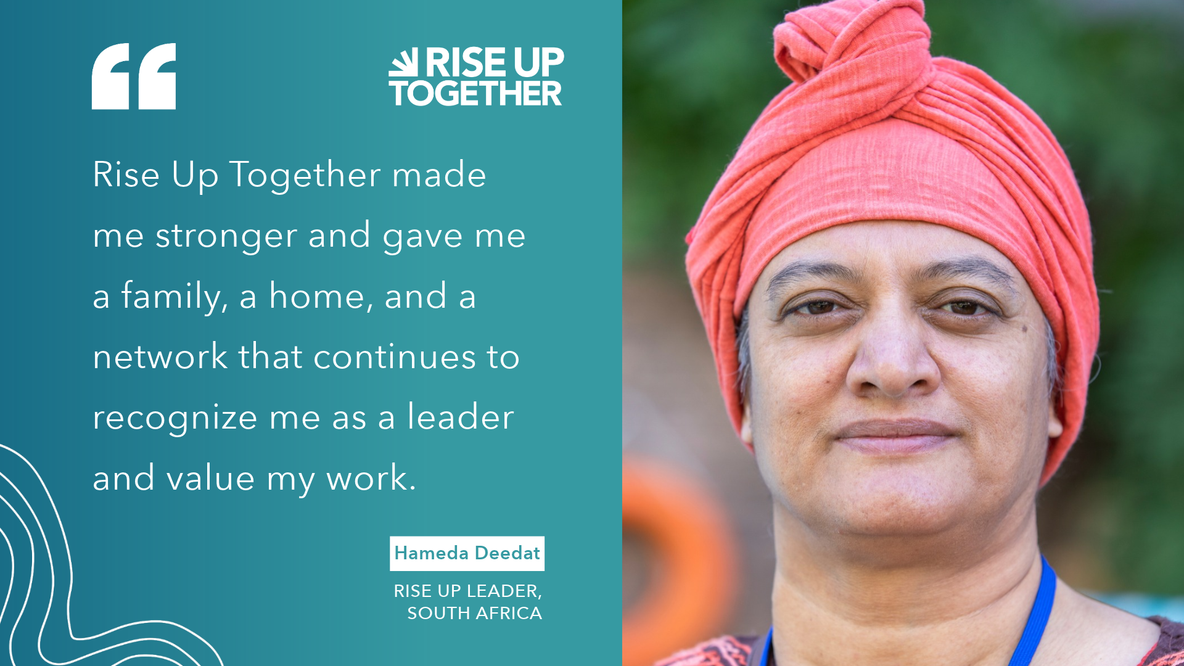
In South Africa, a major policy achievement has created a pathway toward safer workplaces for more than 1.2 million workers. Behind that progress is Rise Up Leader Hameda Deedat, whose determination helped bring an ambitious vision to life.
Hameda became a Rise Up Leader in 2020, bringing years of experience researching the challenges women face in the workplace, particularly sexual harassment, exploitation, and the unequal power dynamics that leave many workers vulnerable to abuse.
Through her work at the National Labour and Economic Development Institute (NALEDI), Hameda understood how urgently stronger workplace protections were needed. She also knew that securing meaningful commitments within South Africa’s trade union movement would be challenging.
At one point, an organization declined to support the project because it considered the goal unattainable. Hameda continued, finding partners who shared her determination to confront gender-based violence and harassment.
With funding and support from Rise Up Together, Hameda and her colleagues at NALEDI worked alongside the Congress of South African Trade Unions (COSATU) and other partners to develop a comprehensive framework addressing gender-based violence, harassment, and femicide.
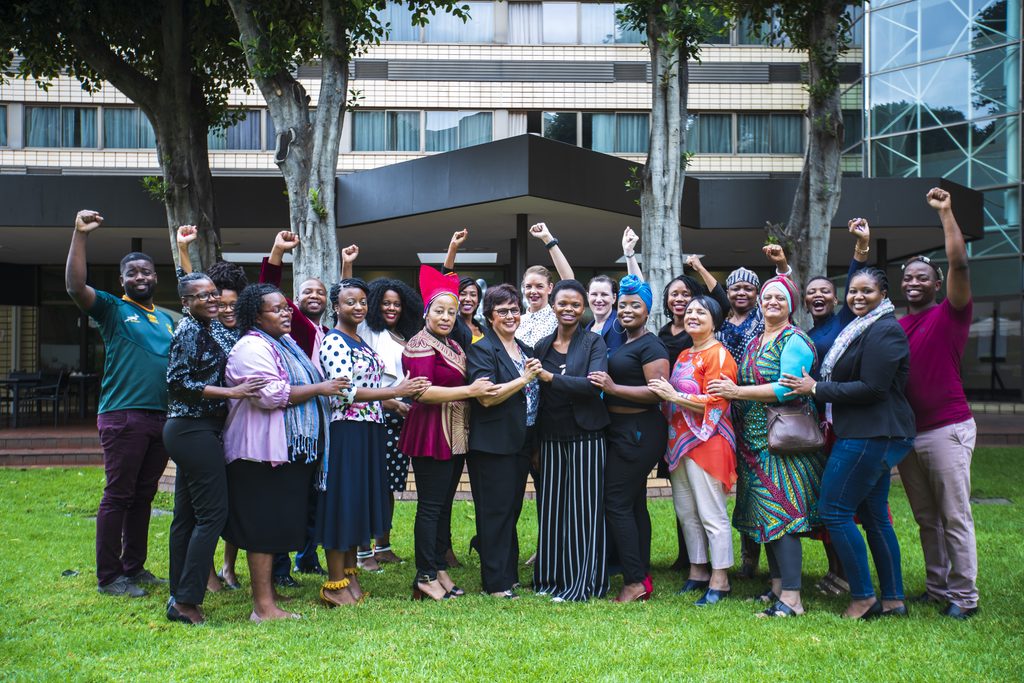
In 2022, COSATU formally endorsed the framework, marking a significant policy win benefitting more than 1.2 million workers.
The framework established a foundation for stronger workplace protections, greater accountability, and improved support for workers experiencing harassment or abuse.
For Hameda, the collective nature of the achievement is especially meaningful. She reflected on the pride she feels that the framework was developed through engagement with the very people responsible for carrying it forward:
“There cannot be a greater achievement and the process in this instance was instrumental.”
Hameda understood that securing the framework was only the first step. “Implementation is another ball game,” she said. A policy alone cannot protect someone experiencing harassment or violence. Workers need people they can turn to who understand their rights, take their concerns seriously, and know how to respond when abuse occurs. Hameda was determined to help make that a reality.
Through a second round of funding from Rise Up Together, Hameda and her partners collaborated with union leaders and employee representatives to strengthen responses to workplace harassment and abuse.
They also trained 89 male gender champions across four South African provinces, encouraging men to examine their own biases, challenge harmful attitudes, and take an active role in preventing violence in their workplaces, homes, and communities.
Hameda remembers the difficult, honest conversations these men were willing to have as one of the most encouraging parts of the project.
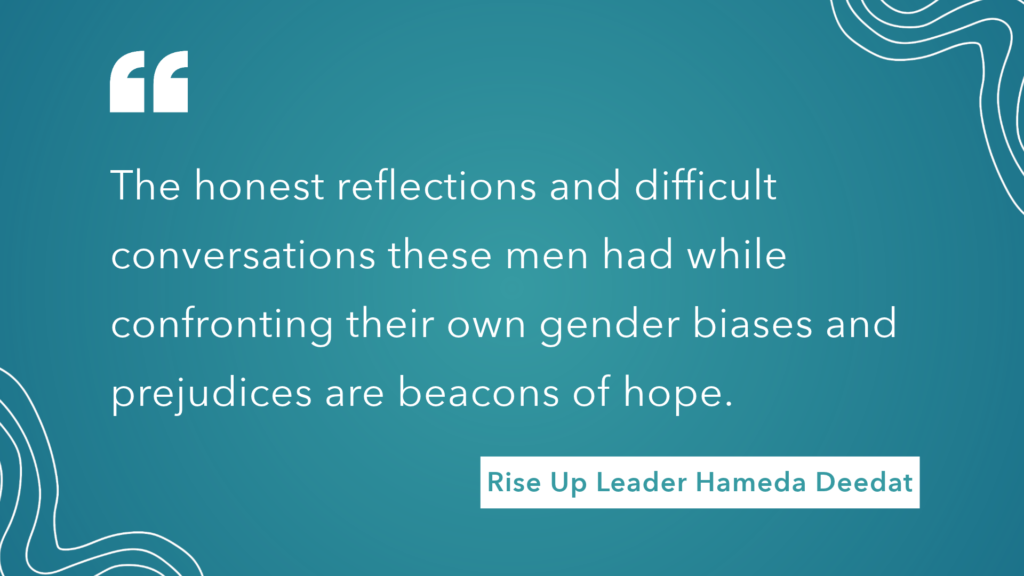
Their willingness to participate, and the fact that this work continues within the trade union movement, remains a source of pride for Hameda.
Several years later, Hameda is reflecting on her achievements amid a painful reality. In November 2025, the South African government officially classified gender-based violence and femicide as a national disaster. The crisis continued to make international headlines throughout 2026, as further killings sparked public outrage and renewed demands for government action.
These developments underscore the continued relevance of Hameda’s 2022 policy achievement and the urgent need to turn commitments into meaningful protections. Sustained investment in local leaders, resources, and accountability remains essential to making that progress possible.
Her reflections underscore the challenges of confronting violence that extends far beyond the workplace. Even with strong policies in place, implementation requires resources, accountability, and sustained commitment from the institutions responsible for protecting workers.
This is also why continued investment in local leaders like Hameda is so critical: they have the experience, relationships, and community knowledge to navigate these challenges and keep pushing for meaningful change, long after an initial policy win.
Still, the framework Hameda helped establish remains in place, and she reports that the male gender champion initiative continues within the trade union movement.
Hameda also credits the relationships and support she found through Rise Up Together with strengthening her leadership and sustaining her connection to this work.
As she considers the future, Hameda speaks openly about how difficult it feels to hold on to hope. Yet she leaves us with a reflection that captures both the weight of the moment and her determination to continue:
“And yet it must, for when all else fails, it’s the glimmer of hope no matter how pale, that is the guiding light.”
Hameda’s achievement is significant, and so is her willingness to ask what more must be done. The framework she and her partners secured gave workers and union leaders a foundation to build on. Ensuring that commitment translates into safer workplaces for all workers remains essential.

