


In Kaduna State, Nigeria, over 118,000 students have a new pathway to continue their education, even when insecurity makes attending school unsafe or impossible.
This milestone is the result of advocacy led by Rise Up Leader Grace Yila Maikano, who, alongside Family Health Advocates in Nigeria Initiative and a coalition of partners, successfully secured government approval of an e-learning policy for public secondary schools in 2023.
For Grace, ensuring girls have access to education is deeply personal.
Growing up as one of seven daughters, Grace watched her mother, a primary school teacher, work tirelessly to ensure all eight of her children received an education after their father passed away.
Her mother’s determination shaped Grace’s belief that every girl deserves the opportunity to learn and pursue her dreams.
“If that girl child does not get an education, we have failed a nation as a whole,” Grace shared.

That conviction inspired Grace’s advocacy in Kaduna State, where banditry, kidnappings, and school closures have disrupted education and left many families fearful of sending their daughters to school.
Recognizing the urgent need for alternative learning opportunities, Grace and her partners developed an e-learning policy to help students continue their education remotely when attending school in person is unsafe.
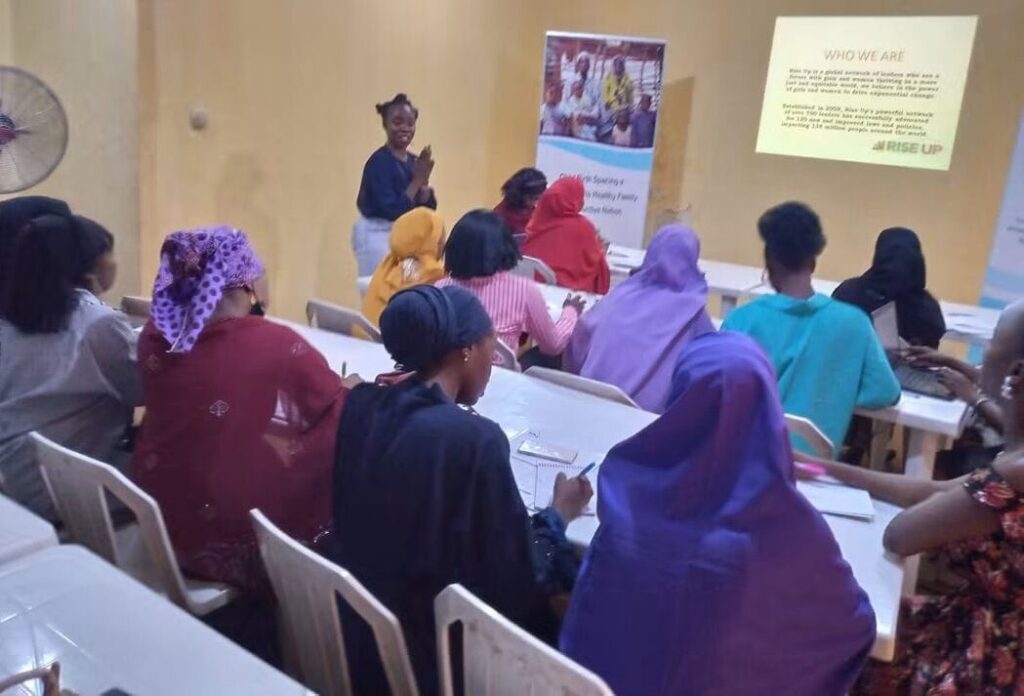
With training and grant funding from Rise Up Together, the coalition successfully advocated for the policy’s approval by the Governor of Kaduna State in 2023.
The policy established a pathway to remote education for an estimated 118,880 students, helping protect continuity of learning during periods of insecurity.
Implementation began with a pilot in five local government areas, supported by government stakeholders and additional donor funding for teacher training. The initiative helped out-of-school children, including those living in displacement camps, return to learning outside traditional classrooms.
Three years later, Grace continues to see the ripple effects of this achievement.
Girls who were out of school during the project have since graduated, completed their exams, continued their education, or started businesses.
The e-learning policy also helped lay the groundwork for a subsequent “second-chance” education policy, developed by the Ministry of Education and other stakeholders to support children who had dropped out of school, particularly adolescent girls and young mothers, to complete their schooling.
“One policy created the need for others,” Grace reflected.
Today, Grace continues advancing girls’ education through her work with Teenage Network, which is implementing an initiative to help adolescent mothers and married girls return to school, supported by The Malala Fund.
Her connection to Rise Up Together also continues. Relationships formed through her Leadership and Advocacy Accelerator cohort helped lead to her current role, while the coaching she received continues to inform her mentorship of adolescent girls.
For Grace, the work remains rooted in the lesson her mother taught her: every girl deserves an education, regardless of the barriers she faces.
And her story demonstrates what becomes possible when local leaders have the resources, relationships, and support to turn their vision into lasting change.

